Electrical equipment manufacturing software is the system that plans, runs, and records production for makers of transformers, switchgear, motors, and other electrical apparatus.
The term covers a few layers, and each one does a different job. A planning system handles orders and materials. A design system holds drawings and revisions. A Manufacturing Execution System (MES) runs the floor: it tells operators what to build, captures what they did, and checks each recorded result against its limits before the step closes.
For engineer-to-order plants, where no two units share a drawing, the MES is the layer that keeps a one-off build traceable from order release to nameplate. This is execution software, separate from electrical design software. Tools like ECAD or EDA draw the product. An MES builds it and proves it.
Manufacturers run five kinds of software (ERP, MRP, MES, PLM, and SCADA), each sitting at a different layer of the plant. Most electrical equipment makers already own the planning layer. The gap usually sits closer to the machine.
| Type | What it does | Where it sits |
|---|---|---|
| ERP | Enterprise Resource Planning. Runs orders, finance, procurement, and inventory. | Back office |
| MRP | Material Requirements Planning. Turns the bill of materials into purchasing and material plans. | Planning |
| MES | Manufacturing Execution System. Drives the build, enforces quality and test, records traceability in real time. | Shop floor |
| PLM | Product Lifecycle Management. Holds drawings, revisions, and engineering change. | Engineering |
| SCADA / IIoT | Reads machine signals and process data from equipment on the line. | Machine layer |
What an electrical equipment maker usually lacks is the layer between the planning system and the machine: the one that turns a released order into instructions an operator follows and a record an auditor trusts. That layer is the MES, and it is what Andea GridUp is, configured for electrical work before it lands. In ISA-95 terms it is the manufacturing operations management (MOM) layer, the one that links your planning systems to the machines on the floor.
An ERP plans the business. An MES runs the build. They answer different questions, and an electrical equipment plant needs both.
The split matters more here because engineer-to-order work changes from one order to the next. An ERP records the plan. It does not enforce the routing, capture the inline test, or hold a failed unit on the floor. Andea GridUp reads the order, the bill of materials, and master data from your ERP, then writes results back, so the two stay in sync without anyone keying it twice. An MES adds execution on top of what the ERP already does well.
Electrical equipment manufacturing (NAICS 33531) is built to order far more often than it is pulled off a shelf. A power transformer, a switchgear lineup, a custom motor: each one carries its own drawing, its own bill of materials, and its own test plan.
These categories share a pattern. A switchgear lineup goes together from busbars, breakers, and compartments specified per project. A transformer is built core-and-coil, wound and stacked to a custom design, then tank-assembled and tested under high voltage. Motors and generators add their own winding and balancing. The thread running through all of them is a unit defined by its order, which is exactly the build an MES has to follow. Andea GridUp ships configured for the transformer and switchgear end of that range.
That mix throws up five problems you see in plant after plant.
Paper travelers and spreadsheets fall apart when the routing changes with each order, and the current revision is hard to keep in front of operators.
A transformer can take months from core to final test, so status is easy to lose and hard to report.
The dielectric, insulation-resistance, and routine tests have to happen, and a missed test that reaches the field becomes a recall.
Utilities and inspectors want unit-level records years after delivery, long after the paper has gone to a box.
Coil winding, core stacking, and HV assembly depend on certified operators, and someone has to track who is signed off for which job.
The demand behind these problems is climbing. Grid upgrades, electrification, EVs, and new data-center load all pull on the same transformer and switchgear output, which puts more one-off builds through the same plants. See our overview of the electrical equipment sector and its 2026 trends maps where that demand is heading: Electrical Equipment Manufacturing Industry: Sector Overview & Key Trends 2026
Andea GridUp runs three jobs from one hub. It drives production on the floor, it enforces quality and test, and it keeps your machines and your people ready for the next build. Multiple modules sit across three pillars and a shared data foundation, and roughly 80% arrive configured for electrical work, so you start from a working system on day one.
A shared foundation sits under the three pillars: Data Loader pulls the order, BOM, and master data in, and DataBridge sends results back to your ERP and PLM. One version of the order, the BOM, and the routing runs across every module.
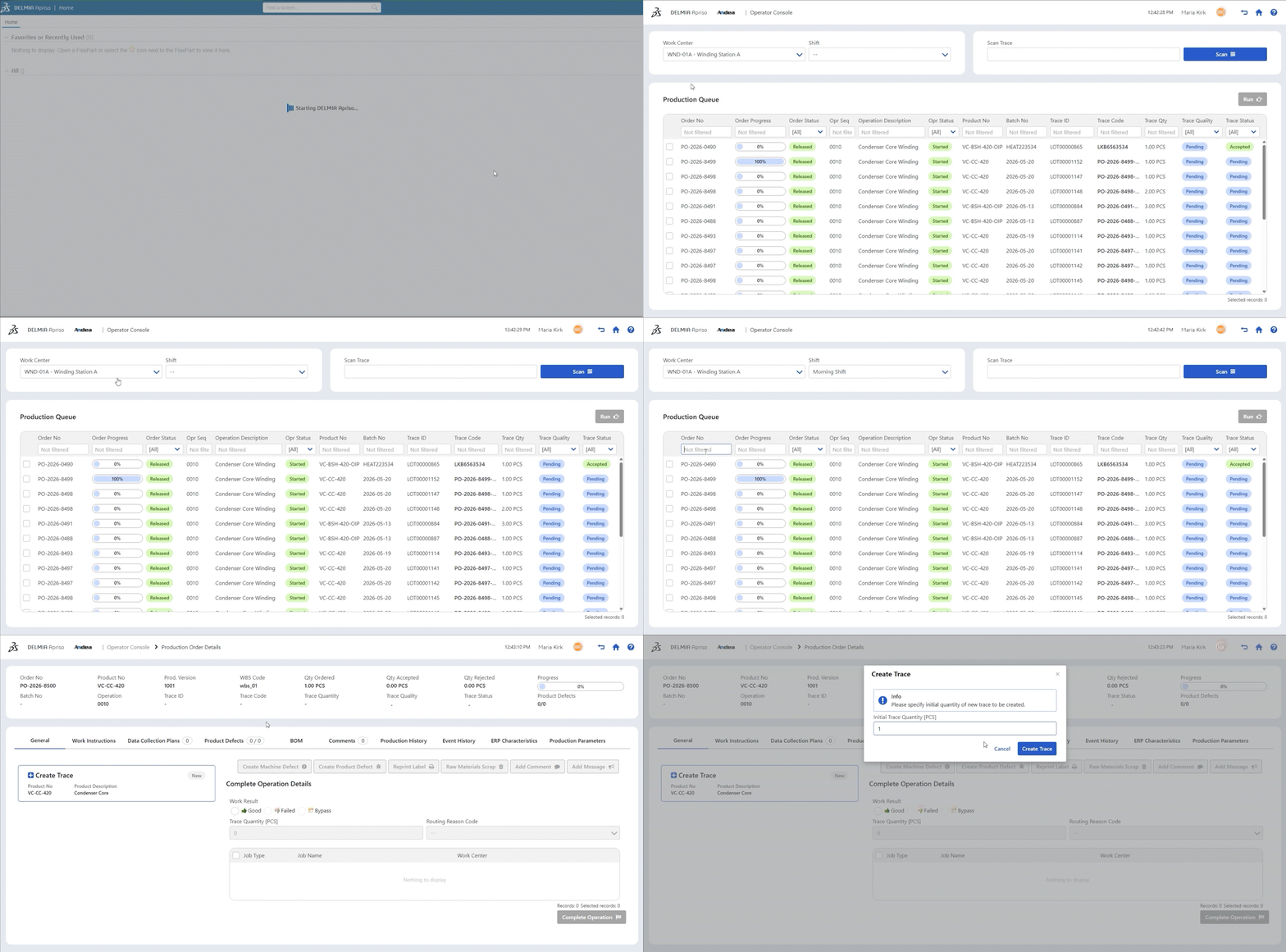
Andea GridUp drives the floor straight from the released order, so the instruction in front of an operator always matches the unit on the bench.
Each unit gets its own routing and process sheet, pulled from the order and the bill of materials. Operators read the current revision on the Operator Workstation. No one is working from last month's printout. Production Control shows where every order stands, from core-and-coil work through assembly, so a build that runs for months still reports its status as it happens.
Production planning and execution is the part generic systems handle badly. Repetitive-line software assumes the next unit looks like the last one. In an engineer-to-order plant it rarely does, and the routing has to follow the drawing for that unit.
Andea GridUp captures every result as the work happens and checks it against its limits. A missing entry stops the operator from closing the step, and a non-conformance is flagged for supervisor review.
Quality Inspection records each result against the serial number and evaluates it automatically against defined limits. Operators must complete the required entries before the step closes, and any out-of-spec result is flagged for supervisor review. Event Monitor keeps the history of every quality event and fires the notifications when something falls out of spec, so nothing slips by unrecorded. The record builds during the work, which is what makes a unit-level genealogy possible two years later.
Those records export to Excel and PDF for your customer reports and audit responses. In-process capture is the line that separates this from after-the-fact reporting: results are recorded at the operation, as the work happens, and checked against their limits on the spot.
A transformer order can sit on the floor for months, so machine uptime and skilled labor decide whether it ships on time.
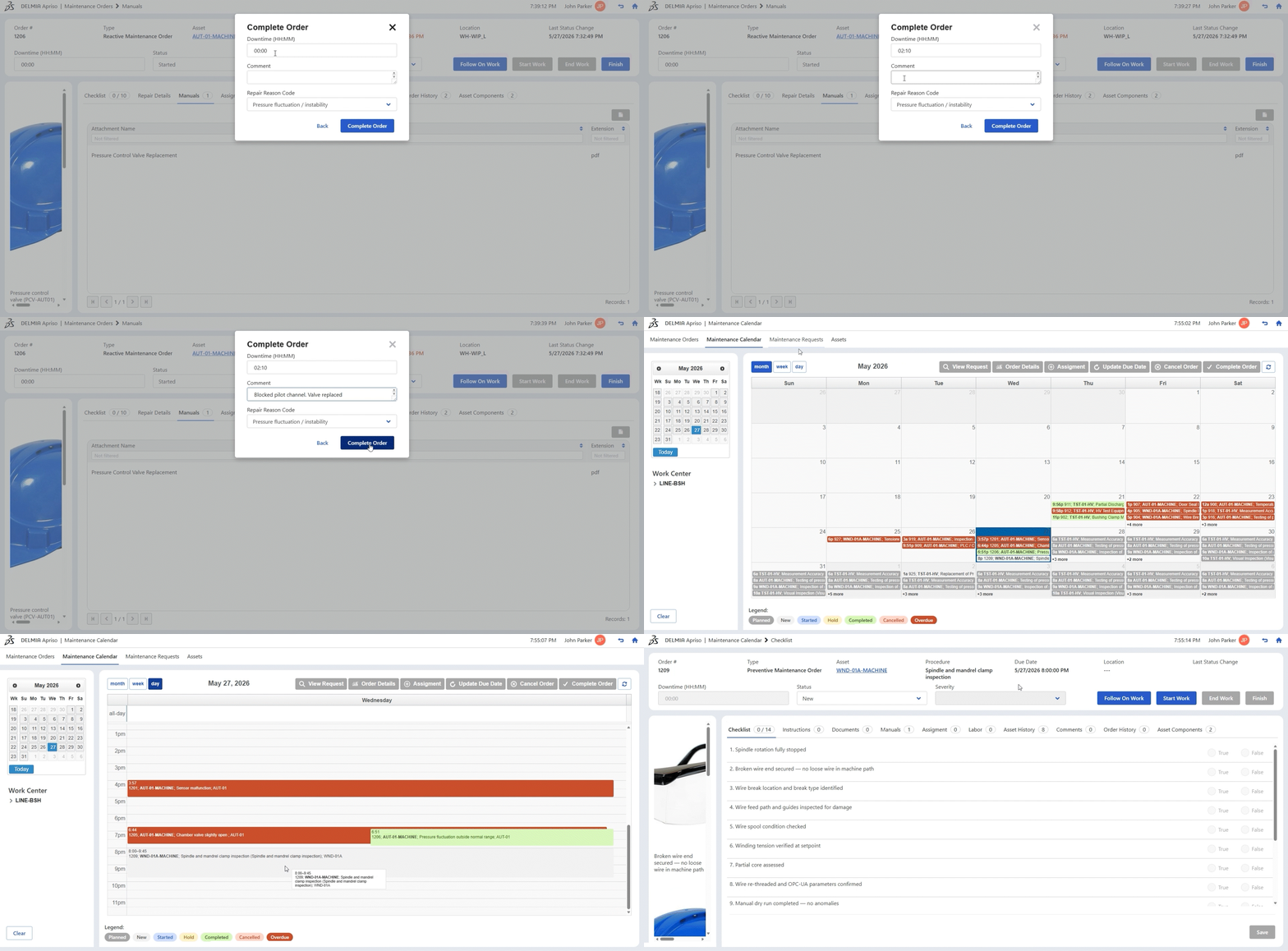
The OEE Monitor tracks availability, performance, and quality, the three parts of Overall Equipment Effectiveness (OEE), and surfaces the losses that stretch a long build out. Maintenance Manager schedules preventive work on the equipment an order depends on, so a press or a winding machine does not stall a unit halfway through. The Skills Matrix tracks which operators are certified for coil winding, core stacking, and HV assembly, and matches them to the jobs that need them.
Under all three pillars, Data Loader brings the order, routing, and BOM in from your systems, and Data Bridge sends results back to your ERP and PLM, so finance and engineering read the same record the floor produced.
Andea GridUp answers a utility audit on any serial number in minutes, reading the full build history back from one record. A utility calls about one serial number, two years after delivery. How long does the answer take?
On paper, it takes days. Someone pulls travelers out of storage, finds the test sheets, and rebuilds the history by hand. With Andea GridUp, it takes minutes.
Pull the serial number and the history reads the whole build back: every operation, the operator who ran it, and each recorded result, on a colour-coded timeline you can export to Excel or PDF. That is the difference between a quick, defensible answer to an inspector and a scramble through old paper. For a maker of high-voltage equipment, it is the difference between an exportable record at the time of build and hoping the file still exists.
Around 80% of what an electrical equipment plant needs ships already configured, which takes out the longest and riskiest phase of an MES rollout.
A blank-screen build spends its first year deciding what the system should do. A prebuilt MES starts from the modules an electrical equipment maker already needs: ETO routing, in-process quality capture, unit genealogy, ERP and PLM integration. You configure instead of construct, so the rollout runs in months, and the cost and risk of that first phase drop with it.
Andea builds and runs manufacturing execution systems, and GridUp is the one configured for electrical and power equipment makers. The product arrives with the electrical work already modeled, then gets tuned to your plant, your routings, and your tests. You start from a system that already understands a transformer. A blank tool would start by learning what one is.
When you line up systems for an electrical equipment plant, check whether each one does the following. The gaps tend to show up against engineer-to-order work and in-process quality.
Score each system against these eight points. A generic ERP clears the back-office items and stalls on the floor and test ones, which is exactly where an electrical equipment plant lives. Most of this gets decided before any RFP goes out, which is where a good MES selection really starts.
Handles engineer-to-order routing, where the build changes with each order
Captures the quality tests your standards require as part of execution, and flags non-conformances
Builds unit-level genealogy tied to the serial number
Produces exportable records for your audits and standards reporting
Reads from and writes back to your existing ERP and PLM
Ships configured for electrical work, so rollout runs in months
Shows real-time floor status across builds that last months
Tracks operator skills for HV and coil work
An ERP plans the business: orders, cost, inventory, ship dates. An MES runs the build on the floor: it drives the routing, captures each test, and records traceability as it happens. They connect, so the MES reads the order from the ERP and writes results back.
No. Design tools like ECAD or EDA produce drawings and engineering data. Manufacturing software, an MES specifically, builds the product those drawings describe, enforces its tests, and records what happened. The two connect through PLM, but they do different jobs.
It is built for discrete, engineer-to-order and make-to-order work, where each unit carries its own routing, drawing, and test plan, which is the norm for transformers and switchgear.
Months. A blank-screen build runs into years. Around 80% of what an electrical equipment plant needs ships configured, so the project tunes a working system to your plant instead of building one from a blank screen.
It captures quality results as the work happens, evaluates each against its limits, flags non-conformances for supervisor review, and ties every result to the serial number. The records export for your audits and standards reporting.
Two ways to take it further. Pick whichever fits where you are.
See it live
Walk through a live session with our team on a transformer or switchgear build. See how Andea GridUp runs your kind of unit, from the operator workstation to the audit trail, before you commit to anything.
Book a demoNo commitment
Not ready for a full demo? Ask us how Andea GridUp would fit your plant, your routings, and your tests. No hard sell, just straight answers from the people who build these systems.
Talk to us